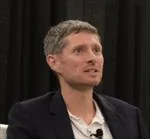
Robin Carhart-Harris, Ph.D.
Head of Psychedelics Division, UCSF Weill Institute; Former Head, Imperial College London Psychedelic Research Group
The neuroscientist who developed the REBUS model of psychedelic action and led the first controlled trials of psilocybin for depression at Imperial College London.
Biography
Robin Carhart-Harris is a British neuroscientist and the world's leading authority on the neuroscience of psychedelics. His seminal fMRI studies at Imperial College London demonstrated that psilocybin reduces activity in the default mode network (DMN) in proportion to the depth of the psychedelic experience — providing the first mechanistic basis for understanding why psychedelics alter consciousness.
He developed the REBUS (Relaxed Beliefs Under Psychedelics) model, which proposes that psychedelics work by flattening the brain's predictive hierarchy — allowing bottom-up sensory and emotional information to break through top-down predictive constraints that maintain ordinary consciousness (and, in depression, maintain depressive cognitive patterns).
In 2022, he moved to UCSF to lead the Psychedelics Division of the Weill Institute for Neurosciences, bringing a major neuroimaging and clinical research program to the US. His current work focuses on understanding the neural mechanisms of psychedelic-assisted therapy.
Organizations
Source Links
Why They Matter to the LearnShrooms Community
Carhart-Harris provides the mechanistic framework that makes psilocybin research scientifically credible beyond outcome studies. His neuroimaging work connects psychedelic phenomenology to measurable brain states — essential for regulatory acceptance and for understanding who is most likely to benefit from treatment.
Legal Context
For the legal landscape where Robin Carhart-Harris, Ph.D. operates, see psilocybin laws in California.